mostly is enough
Build lasting habits with weekly targets instead of fragile streaks. Aim for most days, not every day.

Why streaks set you up to lose
Traditional habit trackers count consecutive days. One rest day and your 90-day progress resets to zero. This can cause anxiety and guilt — the opposite of what builds habits.
Lally et al. (2010) found that habit formation takes an average of 66 days — and occasional rest days don't derail the process. What matters is consistency over time, not perfection.
Streak-based apps punish you for being human. You get sick, travel, or just need a break — and your "progress" vanishes. That's not motivation. That's anxiety.
A better way to build habits
Weekly targets
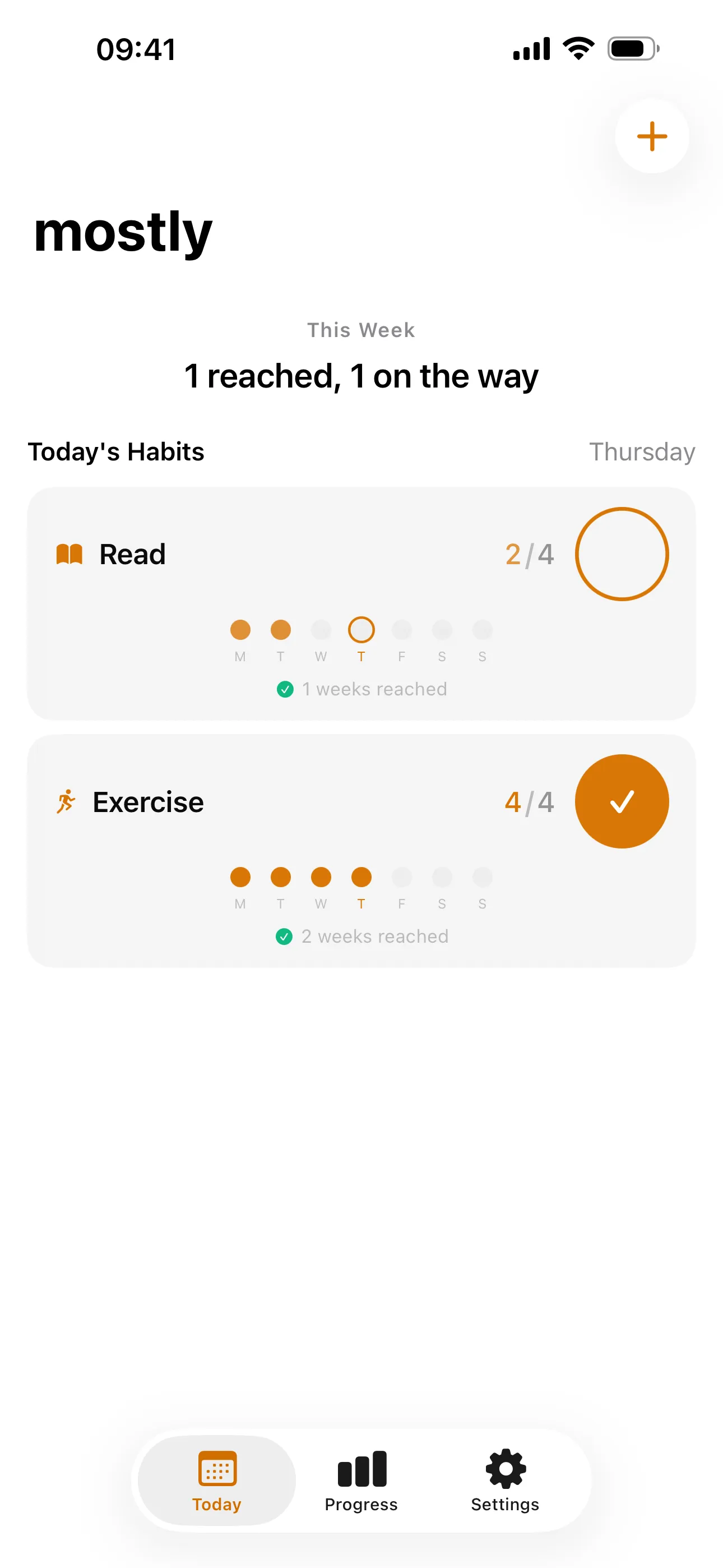
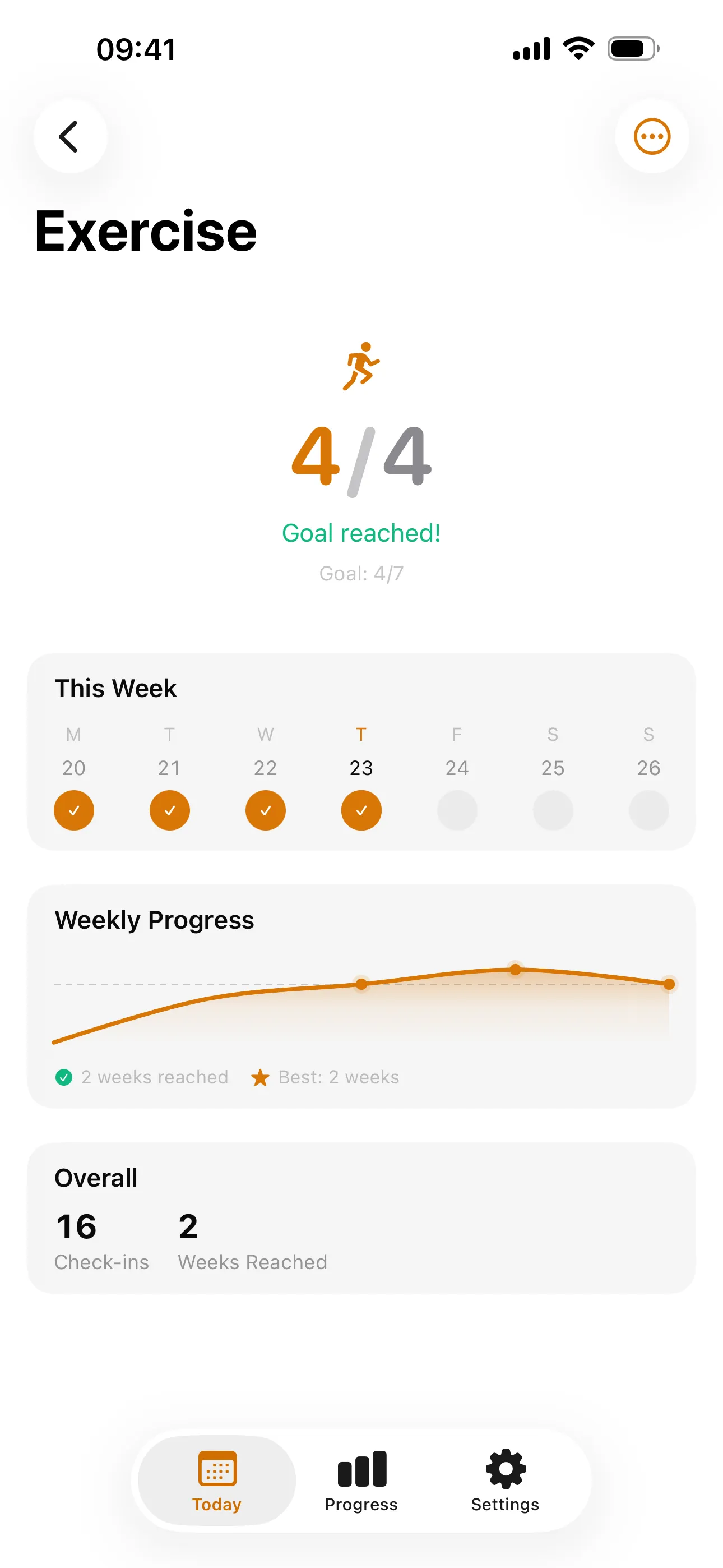
Set a target like 4 out of 7 days. Hit your goal most days, rest when you need to. No punishment for taking a break.
No failure labels
Hit your target? "Goal reached!" Still going? "2 more to go." Week over? "See you next week." No failures. No zeros.
Fresh starts every week
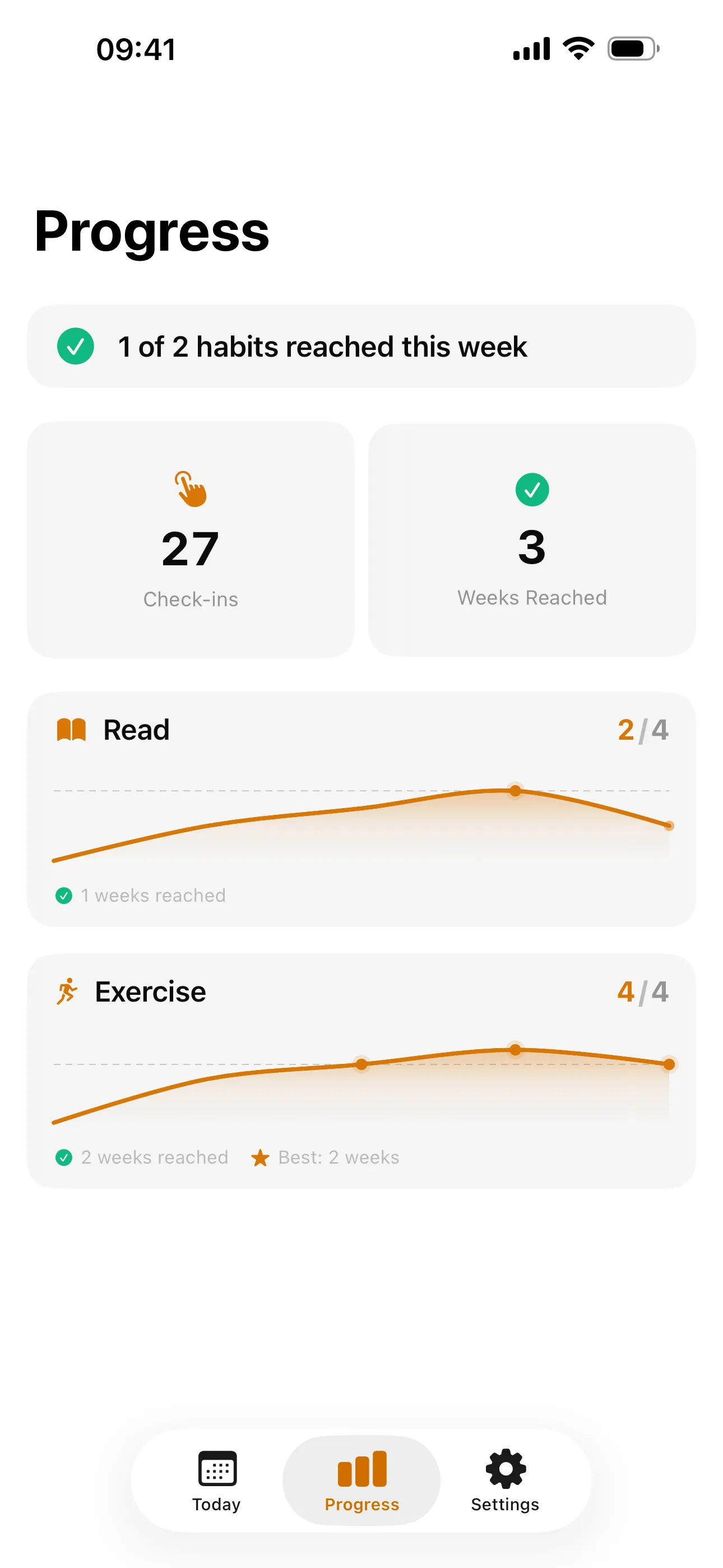
Each week is a fresh start. Last week was tough? This week is a clean slate. No accumulated guilt, no anxiety spirals.
Why people choose mostly
Zero punishment
No streak resets, no HP loss, no shame. Rest days are part of the plan.
Flexible targets
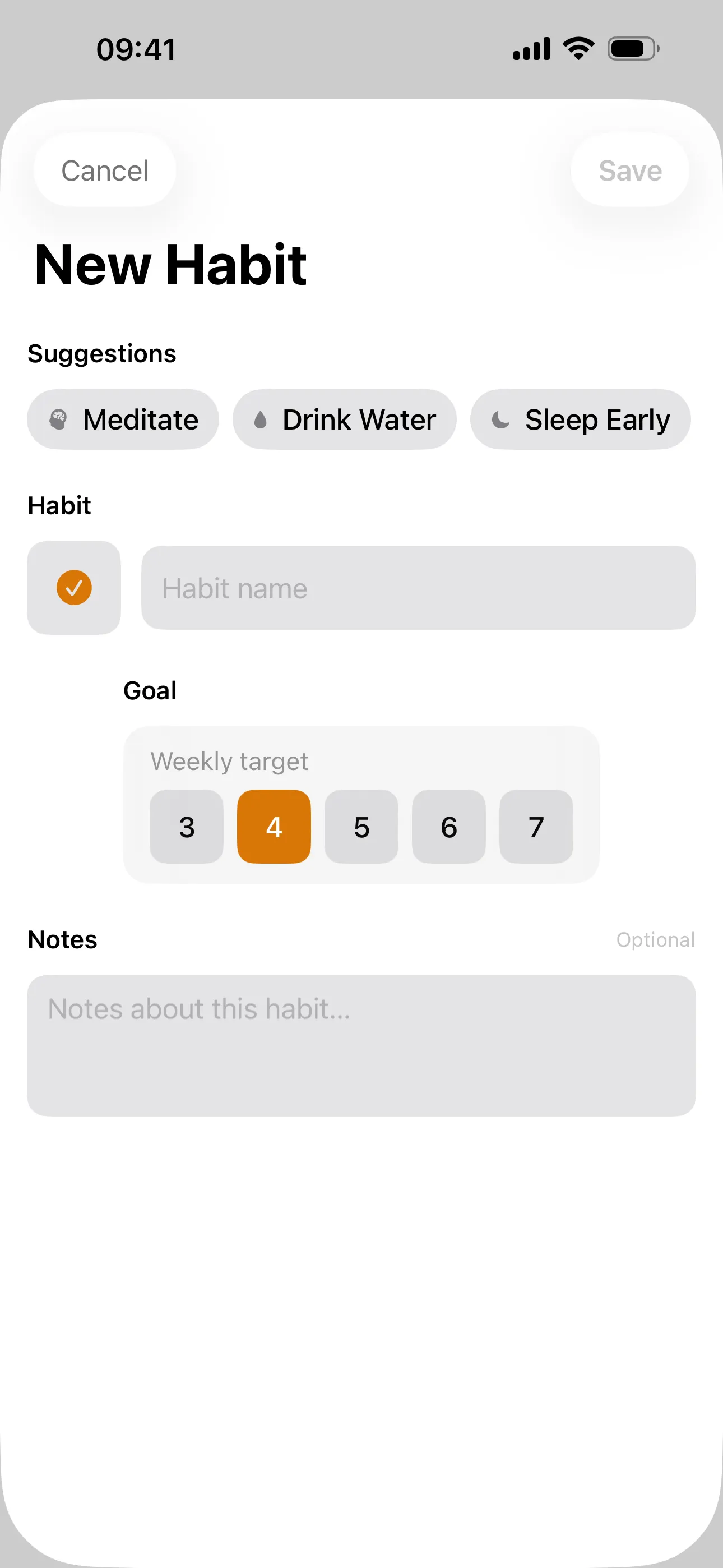
Choose how many days per week works for you. 3/7? 5/7? You decide.
Warm encouragement
Gentle nudges, not guilt trips. Progress over perfection, always.
Simple & focused
No RPG mechanics, no social features, no complexity. Just your habits.
Designed around rest
Rest days are built into the system, not an afterthought. Nothing to feel bad about.
Privacy first
Your data stays on your device, with optional iCloud sync across devices. No tracking, no ads, no data selling.
Home Screen widgets
See your weekly dots and progress ring right on your Home Screen or Lock Screen. No need to open the app.
iCloud sync
Your habits sync seamlessly across all your Apple devices via iCloud.
Works after midnight
Stay up late? Move your day boundary so late-night check-ins still count for the day you mean.
Who mostly is for:
Other comparisons:
From the Habit Lab
Guides for a gentler way to keep going
柔軟な習慣づくり · 5分で読めます
スプーン理論と習慣づくり:変わるエネルギーに合わせた週単位の計画
スプーン理論を自分の状態を振り返るヒントにして、習慣の小さな選択肢と無理のない週目標を考える方法を紹介します。
유연한 습관 · 5분
스푼 이론과 습관 계획: 달라지는 에너지에 맞춘 주간 목표
스푼 이론을 나의 상태를 돌아보는 비유로 활용하고, 습관의 작은 버전과 현실적인 주간 목표를 정하는 방법을 살펴봐요.
Flexible habits · 5 min read
Spoon Theory and Habit Planning: A Flexible Weekly Approach
Use the spoon theory metaphor as a reflection prompt, shape a habit into smaller options, and choose a weekly target that leaves room for changing energy.
灵活习惯 · 5 分钟
勺子理论与习惯规划:按变化中的精力设定每周目标
把勺子理论当作观察自身状态的比喻,为习惯准备更轻量的做法,再设一个贴合生活的每周目标。
FAQ
What makes mostly different from other habit trackers?
Most habit trackers count consecutive days and reset when you miss one. mostly uses weekly targets — aim for 4 out of 7 days, rest when you need to. No streaks, no resets, no guilt.
Is mostly free?
It's a paid app on the App Store. One purchase and you get the whole thing — no subscription, no ads, no in-app stuff.
Is mostly good for ADHD?
Yes. The weekly target model is naturally forgiving for inconsistent schedules. You don't need to check in every day — just most days. Many people with ADHD find this approach less stressful than streak-based apps.
Does mostly work for late nights or shift work?
Yes. You can move your day boundary as late as 5 AM, so a 2 AM check-in can still count for the day you mean. Weekly targets also fit shifting schedules better than rigid daily plans.
Ready to build habits that last?
Stop chasing streaks. Consistency beats perfection.